
In the ongoing pursuit for the world’s best all-around brain booster and mood enhancer formulation rolled into one, one very unique substance stands out.
While many do not necessarily believe in its venerated effects, the widespread use of l-theanine has created quite a stir among certain groups of the population who simply require the ability to maximize the true potential of their brains without necessarily getting mentally and physically exhausted.
Many believe that such a substance is just a figment of one’s very creative imagination. Whether this can hold water or not, it remains to be seen if the hundreds of thousands who have already tried l-theanine will have something negative to say about the wonder supplement.
L-Theanine
 Commonly found in green tea and nootropics, l-theanine is chemically and functionally similar to the amino acids glutamine and glutamate. Although l-theanine can also be found in white and black tea leaves, the unusually high concentrations of l-theanine in gyokuro leaves have pointed to the preponderance of the substance in green tea.
And as such, it has become a symbol of renewed vigor especially among the working class of Asian civilizations where it was first isolated.
A variety of scholarly articles, research papers, and clinical studies have pointed to the effectiveness of l-theanine in eliciting remarkable changes or improvements in human cognitive processes as well as mild to moderate effects on elevating and boosting the state of mental wellbeing of individuals.
The well recognized benefits of l-theanine include significantly improved short term and long term memory, reduction in mental and emotional stress, and the promotion of a general state of well-being that can be characterized as calm and relaxing.
The observed action of l-theanine on mood regulation and improvement of cognitive processes is closely associated to its effects on serotonin and gamma amino butyric acid.
Whereas gamma amino butyric acid stimulation results in toning down of the excitatory electrical nerve impulse transmission to facilitate a more relaxed and calm state, the serotonin makes sure of the speedier and more efficient communication between nerve cells to enable lightning speed cognition.
While green tea is naturally rich in l-theanine, not everyone drinks green tea. Furthermore, the amounts or levels of l-theanine in commercially available green team products may not be sufficient enough to produce the cognitive improvements and stress alleviation that may be required in today’s very tough environments.
As such, supplementation with l-theanine will guarantee you sufficient levels of this wonder supplements to help you begin a life that is characterized as intellectually fulfilling as well as well as free from mental and emotional stress.
The History of L-Theanine
 Understanding the history of l-theanine is more like trying to study the origins and history of green tea. Green tea has always been a staple of East Asian cultures for several thousands of years.
From China to Korea to Japan, green tea was the perfect companion especially for the Buddhist monks, masters, and apprentices who required absolute concentration and focus in their meditations.
It is largely known to soothe the soul and calm the nerves necessary for drawing focus into the inner self. As meditation requires absolute concentration and focus, these masters of Zen regularly drink green tea in order to boost their ability to concentrate and draw the psychic energy around them.
Green tea also relaxes their muscles and eases their mind so that they can concentrate better.
Of course, by this time they still did not have any idea of the word l-theanine. It was way much later, in 1949 to be exact, when l-theanine was first discovered by the Japanese and then extracted from the gyokuro leaves a year later. The following decades was devoted to the testing and experimentation of the different properties of l-theanine.
In 1999, researchers experimented with the effects of l-theanine on human cognition. Two groups of individuals were involved. One was given 50 to 200 milligrams of l-theanine while the other group was given a placebo type of pill, physically similar to the l-theanine preparation. The treatment was given on a weekly basis.
Neurological electrical patterns were detected and measured both prior to and immediately after the treatment. The study revealed that there were significantly more Alpha waves on the group that received the l-theanine treatment than those who received the placebo.
The findings suggest that l-theanine can significantly promote a general sense of relaxation and calmness without necessarily putting a person to sleep. This has been correlated as well with higher mental alertness and greater focus which should provide the necessary requirements for finishing a particular complex task.
Currently, researchers are expanding from the landmark study of 1991 to explore the benefits of l-theanine in other areas such as longevity, improvement of neuronal health, and other potential health benefits.
Active Mechanism of Action of L-Theanine
While health experts are still piecing together the puzzle of how exactly l-theanine works, it is clear to say that its effects on both serotonin and gamma amino butyric acid, or GABA, holds the key to understanding its many beneficial effects.
L-theanine is readily absorbed in the small intestines and distributed throughout the body by the blood. When it reaches the brain, it crosses the blood-brain barrier to exert its physiologic and chemical effects on serotonin and GABA as well as other neurotransmitters like dopamine and norepinephrine.
Serotonin is largely taken for its mood enhancing effects as well as the ability to provide for a more precise motor function and control. GABA reduces the rapid firing of electrical impulses so that you will be able to feel more relaxed and generally calmer. Dopamine is the substance that is responsible for making you feel content and happy. Norepinephrine readies you for the fight ahead.
It is often associated with the fight or flight response mechanism that is characterized by increased situational awareness and acuteness of focus as well as increased oxygenation to vital body organs such as the brain, the heart, the lungs, and the muscles.
Benefits of L-Theanine For Mental Relaxation
Generally speaking, the benefits of l-theanine are two-fold: improvement in mental processes and abilities and the creation of a more relaxed, calm state that can be taken as stress-free state. From these two general benefits come more specific physiologic, emotional, and mental gains.
- Calm and relaxation and fights stress
The effects of l-theanine on gamma amino butyric acid can provide unparalleled sense of calmness and relaxation. It eases the mind into a more mellowed rhythm so you can focus more on what needs to be done. Its action on the neurotransmitter is what you will need in order to see yourself navigating through stressful situations in a breeze. Its known benefits in mitigating both physical and mental stress are unparalleled.
- Improved cognitive abilities
L-theanine’s effects on serotonin and norepinephrine can significantly improve the many mental processes and abilities of the brain. This involves dramatic improvements in the ability to think logically as well as imaginatively. Short- and long- term memory can be enhanced as well as the capacity for both deductive and inductive reasoning.
- Increased alertness, concentration, and focus
The effects of l-theanine on norepinephrine, epinephrine, and serotonin can bring about a heightened level of awareness as well as focus that may be considered very important in many of the complex tasks that you may be required to perform.
- Cardiovascular health
One of the relatively unknown benefits of l-theanine is in its protective function for the cardiovascular system. Its action on norepinephrine and epinephrine can help regulate blood flow as well as function in the lowering of blood glucose. L-theanine has also been shown to provide a more responsive immune system.
While the above-mentioned benefits can also be enjoyed with regular drinking of green tea, you will need to consume significantly greater amounts of green tea beverages every single day. A more practical solution will be for your to take a daily supplement rich in l-theanine. Not only are commercially available l-theanine supplements more practical, they also provide the more readily observable results that you require of any dietary supplement.
Proper Dosage Using L-Theanine
 The daily recommended dose for l-theanine is between 100 and 200 milligram. For starters, it is recommended that 50 milligrams be sufficient just to be on the safe side.
L-theanine is best taken on an empty stomach, preferably at least 30 minutes before a meal or not less than 2 hours after a meal. Users have reported better outcomes when l-theanine was consumed on an empty stomach. Nonetheless, l-theanine can also be taken with meals.
L-theanine can exert its physiologic effects in as little as an hour which should peak within five hours’ time. It is completely cleared from your body within 24 hours making a once-daily dosing recommendation just ideal.
In some cases, people have been known to cycle on and off their l-theanine regimen. Some would consume it for about a week then purposely refrain from it for the following week. L-theanine is again resumed on the third week and so on and so forth. However you decide to take l-theanine, it should not cause you any worries because it is generally safe. After all, it is an extract from green tea leaves.
Stacking with Caffeine
Some experts have suggested the stacking of l-theanine with caffeine for better results in terms of cognitive enhancement, focus, alertness, and concentration. As caffeine is a very potent stimulant, the GABA-inducing properties of l-theanine can significantly counter the negative effects of caffeine so you will not have the associated symptoms of caffeine intoxication such as jitteriness and sleeping problems.
Potential L Theanine Side Effects
As l-theanine is a natural extract of green tea, unless you are extra sensitive to green tea, it is generally well-tolerated. However, there have been reports of headaches and dizziness. If you have doubts regarding your eligibility to take l-theanine, especially if you have existing heart conditions or are taking cardiac medications, it is best to consult your primary care physician regarding the inclusion of l-theanine into your therapeutic regimen as a supplement.
Buy L-Theanine Supplements Online
L-theanine is readily available in online stores, health food stores, drugstores, and pharmacies in almost every nation in the globe. While it may be more advisable to purchase on physical stores, the convenience and the relatively lower price of l-theanine supplements in online stores make it more preferable to shop and order online.


 Based on the Greek words ‘nous’ and ‘trepein’ which literally means ‘mind’ and ‘to turn or bend’, respectively, the term nootropic was first introduced into usage in the medical scientific community by the Romanian chemist and psychologist, Corneliu E. Giurgea in 1972.
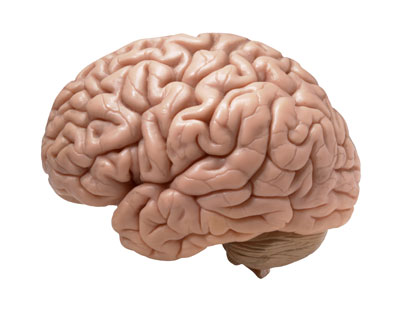 Since we are talking about how to unleash the power of the brain, it is important to spend some time understanding a few important things about the human brain.